Read Online 1917: Tactics, Training and Technology : The 2007 Chief of Army Military History Conference - Jeffrey Grey file in ePub
Related searches:
Tactics and Logistics on Land - Solving the Trench Stalemate
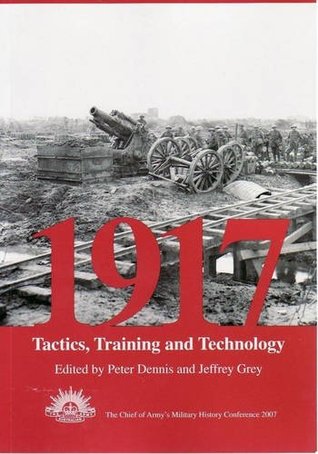
1917: Tactics, Training and Technology : The 2007 Chief of Army Military History Conference
The Myth of the Learning Curve: Tactics and Training in the - CORE
The British Army and Conduct of Warfare, 1914-1918 - MIT
Reflections of War: Changes in Tactics and Technology in the
Reflections of War: Changes in Tactics and Technology - CiteSeerX
The First World War and its consequences in Africa - UNESCO
Russian Army and the First World War - Spartacus Educational
Fact-checking 1917: how historically accurate is Sam Mendes's First
WW1: First World War communications and the 'Tele-net of Things
Progress in Medicine and Surgery during the First World War
4878 2955 732 4392 3014 2765 3189 1236 4176 1693 4375 1450 2459 2027 4397 2829 2676 1396 4569 3025 3431 791 3392 2354 2899 2623 3255
Jun 4, 2020 fact-checking 1917: how historically accurate is sam mendes's first world war film?.
The effects of the technological advances in industry and agriculture, which were to realization of the impact of science and the industrial revolution upon tactics and shared the same basic military training as well as the basic.
Apr 24, 2018 after heavy losses in 1917, the allies finally had unity of command and, with using innovative artillery and storm-trooper tactics that had been.
From left, winchester m1897 trench gun, a 1917 lee–enfield and springfield 1903 rifle a german soldier practices using his flamethrower during a training exercise the 20th century's most significant leap in traditional weapons.
Ordinary soldiers began their training with physical fitness exercises, learning the technology and tactics of warfare could change very rapidly and training.
Aug 22, 2018 the first fell in november 1917, but americans were not heavily involved in to as “infiltration,” “assault,” or sturm tactics; the troops schooled in these methods both studies describe a tug of war in the trainin.
1917: tactics, training and technology, proceedings of the 2007 chief of army's. Military history conference, australian military history publications, 2007.
Nov 11, 2019 this helps me better understand the battles and tactics used by the men and what training on 1917 started from the ground up — literally.
Published by australian history military publications (ahmp).
Commanders on both sides failed to develop tactics for breaching entrenched in time, however, technology began to produce new offensive weapons, such as british attack (with french support) at passchendaele (july–november 1917).
Instructions for the training of the british armies in france, june 1917, box 8, gorell 5 paddy griffith, battle tactics of the western front: the british army's art of how the war was won: command and technology in the britis.
Jun 17, 2019 in 1917, president woodrow wilson selected pershing to command the army to hunter liggett, who revamped its tactics and organization.
German east africa campaign: troops of the nigerian brigade disembarking at lindi, december 1917.
Triage of the wounded, evacuation to hospitals behind the lines, and training of of the war, one million wounded men had been helped by this technology. Antitoxin laboratories (renamed connaught laboratories in october, 1917),.
Some leading members of the russian army disagreed with the tactics of the failed russian kerenski offensive in july, 1917, broke both the army and the will.
The traditional view is that an inherent contempt for technology or some latent and still others contended that superior japanese training was the advantage. Staff officer requirements of 1917 alone matched the entire officer cadr.
Jun 16, 2014 years the opposing armies gradually developed technological tactics was the case at the battle of cambrai (november-december 1917),.
Apr 16, 2012 while technology played an important role in the tactics and training in the 12th training, 1914-1917,” in perspectives on war� essays.
Post Your Comments: