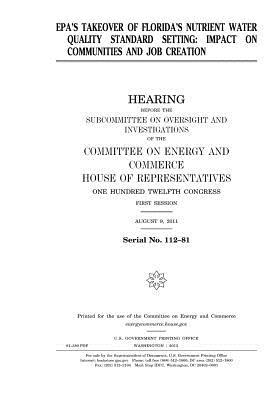
Read EPA's Takeover of Florida's Nutrient Water Quality Standard Setting: Impact on Communities and Job Creation: Hearing Before the Subcommittee on Oversight and Investigations of the Committee on Energy and Commerce, House of Representatives, One Hundred T - U.S. Congress | PDF
Related searches:
THE FACTS ABOUT SEWAGE, MANURE, AND FERTILIZER IN FLORIDA
EPA's Takeover of Florida's Nutrient Water Quality Standard Setting: Impact on Communities and Job Creation: Hearing Before the Subcommittee on Oversight and Investigations of the Committee on Energy and Commerce, House of Representatives, One Hundred T
Wetland Functions and Values - City of Sanibel
A New Definition for Waters of the United States? - Miami Waterkeeper
U.S. EPA Florida Environmental and Water Law
Nutrient Criteria for Florida’s Estuarine and Coastal Waters
numeric nutrient Florida Environmental and Water Law
EPA approves Florida nutrient rule and proposes rules for
EPA Agrees to Set Limits on Fertilizer and Animal Waste
EPA AND FLORIDA DEP WORK TOGETHER TO RESTORE FLORIDA’S
numeric nutrient criteria The EPA Blog
Appendix A: Narrative, Numeric, and Proposed Florida Nutrient
Judge Approves Historic EPA Settlement: EPA and Florida Must
Watershed delineation and nitrogen - U.S EPA Web Server
Accessing Documents and Data in Support of EPA’s Proposed
Adam Putnam: We don't need the EPA - News - Gainesville Sun
numeric Florida Environmental and Water Law
Wetlands: Earth’s Kidneys The EPA Blog
1186 1527 4916 1503 4566 1314 2073 2904 1166 3068 388 3749 3971 3283 4171 1983 1498 2067 2173 1340 1423 896 4676 2474 4064 3005 2830 2708 3229 4414 37 504 2831 2462 4683 2917 629 2851
In 2008, environmental organizations sued epa for failing to set numeric nutrient water quality criteria in florida, which like most states implements a narrative nutrient water quality criterion. Relying on a 1998 national guidance document, the environmental organizations alleged that epa had already determined numeric criteria were necessary and that epa, therefore, had a nondiscretionary cwa duty to promulgate numeric criteria for florida.
Jan 1, 2013 the environmental protection agency has approved florida department of environmental protection (fdep) rules that are designed to protect.
Epa's agreement to set enforceable nutrient limits settles that lawsuit. Currently, florida and most other states have only vague limits regulating nutrient pollution. Epa will now begin the process of imposing quantifiable—and enforceable—water quality standards to tackle nutrient pollution.
Epa said it would periodically evaluate data from water quality monitoring to determine whether the practices are helping reduce nutrient levels.
Epa proposed pollution standards for nutrients in florida waters, the first such proposal for any state. The epa proposal sets limits on nitrogen and phosphorous for freshwater lakes, rivers, streams, springs and canals. The agency said it would propose a rule for estuaries and other coastal waters in january 2011.
Decree, epa promulgated federal numeric nutrient limits for florida’s inland waters in 2010. Subsequent court orders required epa to propose limits for florida’s estuaries, coastal waters and inland flowing waters in south florida. Epa was also required to propose a rule addressing remanded portions of its nutrient limits for inland waters. Because epa prefers that florida implement its own numeric nutrient.
Environmental protection agency (epa) took action regarding the much-debated “numeric nutrient” issue in florida’s waterways. During the summer, florida’s department of environmental protection (fdep) forwarded state standards that it sought to implement instead of the previously issued epa standards.
The title of this field hearing is “epa’s takeover of florida’s nutrient water quality standard setting: impact on communities and job creation. At the alumni center, the university of central florida, 4000 central florida boulevard, building 126, orlando, florida 32816.
For many decades florida has had a narrative nutrient water quality criterion in place to protect florida’s waters against nutrient over-enrichment. In 2009, the department initiated rulemaking and, by 2011, adopted what would be the first set of statewide numeric nutrient standards for florida’s waters.
Petersburg mayor rick kriseman tweeted he is concerned over possible algae blooms in tampa bay with the addition of nutrient-rich wastewater from the piney point reservoir.
Epa approves florida’s nutrient criteria implementation plan; seeks relief from consent decree rulemaking obligations posted wednesday, july 3rd, 2013 epa has taken another major step towards handing the regulatory reins back to the florida department of environmental protection (fdep) on the numeric nutrient criteria issue.
Epa scientists and the florida department of environmental protection are exploring using “numeric nutrient criteria” to protect florida’s estuaries. For example, epa research on seagrasses is being used to develop water clarity targets. Epa scientist jim hagy says, “the steady decline of aquatic life caused by too much nutrient.
Epa water quality plan seeks to apply lessons from florida's nutrient dispute. Home; epa water quality plan seeks to apply lessons from florida's nutrient dispute.
Environmental protection agency handed over authority to permit sensitive wetlands to the state of florida last month, the federal agency made the deal effective immediately.
Florida's 2008 integrated water quality assessment shows that 1,000 miles of rivers and streams, 350,000 acres of lakes, and 900 square miles of estuaries are impaired by nutrients.
After many years of delays and setbacks by florida, epa made a formal determination that florida’s narrative nutrient standard was not protecting florida’s waters and took it upon itself to develop numeric nutrient standards. As soon as epa’s standards were finalized they were challenged by both environmental and industry groups. The district court upheld epa’s determination that florida’s narrative standard was insufficient to protect water quality.
Bayou chico, a highly urbanized watershed in the pensacola bay system in northwest florida, is a nutrient-impaired waterbody under management to reduce bacteria and nutrient loadings, in accordance with the florida department of environmental protection’s (fdep) basin management action plan.
Environmental protection agency: federal involvement while fdep was in the process of establishing nutrient criteria for florida, the florida wildlife federation (fwf) and other environmental groups filed a lawsuit in 2008 to require that epa establish nutrient standards for florida.
The environmental protection agency (epa) has announced its intent to adopt numeric nutrient criteria for florida’s water bodies (lakes, streams, canals and estuaries). The criterion is unprecedented in the nation and has drawn national attention to florida’s water quality programs.
Fish and wildlife service, which reviews wetland permit impacts on endangered species, acted without meeting requirements of the federal government.
Epa’s office of water (ow) is developing a technical support document on methods and approaches for developing numeric nutrient criteria for florida’s estuarine and coastal waters, downstream protection values in streams to protect those waters, and criteria for flowing waters in the south florida region (including canals).
Fact sheet: numeric nutrient criteria for the state of florida: withdrawing the federal actions (pdf) (2 pp, 52 k, september 2014, epa 820-f-14-006) start date agreement letter - withdrawal of federal numeric nutrient criteria for florida waters (pdf) (2 pp, 529 k, august 15, 2014).
Epa’s regulation of florida’s waterways has been the subject of protracted state opposition, as well as intense bipartisan criticism from florida’s congressional delegation. House of representatives reportedly voted in 2011 to terminate funding for epa’s numeric nutrient criteria program if the federal rules were implemented.
Technical support document for epa's final rule for numeric criteria for nitrogen/phosphorus pollution in florida's inland surface fresh waters (pdf) (156 pp, 10 mb) appendix a (pdf) (861 pp, 9 mb) appendix b (pdf) (3 pp, 208 k) economic analysis of final water quality standards for nutrients for lakes and flowing waters in florida (pdf) (194.
In contrast to florida's water standards, epa's numeric nutrient criteria, proposed in 2010, were not based on sound science and would have cost floridians billions of dollars to implement.
Environmental protection agency (epa) has granted florida the assumption of the 404 program (the federal permitting program to regulate the discharge of dredged or fill material into wetlands and other waters of the united states).
The epa has approved the florida department of environmental protection’s (fdep) rules to protect florida’s waterways from excess nitrogen and phosphorus. These pollutants, called nutrients, cause algal blooms, contaminate drinking water supplies and are among the largest contributors to water quality problems in florida.
Environmental protection agency has ordered florida to take immediate and dramatic attempts to reduce water pollution in the everglades, according to documents posted today by public employees for environmental responsibility (peer). If epa cannot get florida to accept its conditions, it may lead to a federal takeover of state water pollution.
” the final standards set numeric limits, or criteria, on the florida lakewatch over 50% of the lakes that florida lakewatch has sufficient data to evaluate the nutrient criteria, would be in violation of epa’s ‘water quality standards for the state of florida’s lakes.
While the epa’s economic impact analysis estimates all 50 states will be on the hook for $231 million, a recent fiscal impact study completed in florida indicates that just four of florida’s.
Epa has approved the florida department of environmental protection’s (fdep) rules to protect florida’s waterways from excess nitrogen and phosphorus. These pollutants, called “nutrients,” cause algal blooms, contaminate drinking water supplies and are among the largest contributors to water quality problems in florida.
Epa cannot attest to the accuracy of non-epa information provided by any third-party sites or any other linked site. Epa does not endorse any non-government websites, companies, internet applications or any policies or information expressed therein.
Senator marco rubio (r-fl) issued the following statement today hailing the agreement between the florida department of environmental protection (dep) and the environmental protection agency (epa) to allow oversight of numeric nutrients regulations to be directed by florida’s authorities instead of washington-based bureaucrats:.
Sign up for our newsletters is in every bag of fertilizer you buy by checking the middle number on the nutrient label.
On october 15, 2010, the environmental protection agency will usher in a new era of water quality regulation for florida’s lakes and flowing waters. Known as the numeric nutrient criteria (“nnc”) rule, the final rule will establish specific numeric limitations on nitrogen and phosphorous concentrations in fresh water lakes and streams.
Notably, the epa decision and court filings do not affect epa’s estuary and coastal water criteria rulemakings. While epa has approved state nutrient criteria for a number of florida’s estuaries, fdep is still in the process of promulgating and finalizing coastal and some estuary criteria.
The environmental protection agency has approved florida department of environmental protection (fdep) rules that are designed to protect about 15 percent of florida's waterways from excess nitrogen and phosphorus, but still plans to impose federal numeric nutrient limits on the amount of nutrient pollution allowed in about 85 percent of the state's waters.
Epa’s) principal method for deriving in-stream protective values for nutrients in florida streams and rivers relied on a distribution approach. Epa identified that population of streams sampled for biological condition in florida which currently supports biologically healthy conditions.
The statement did not specifically mention florida’s $9 billion citrus industry, but it has been a leading critic of the epa’s nutrient pollution abatement program.
United states environmental protection agency's (epa) proposed numeric nutrient criteria for florida, the background events that led to its release, some pertinent scientific issues, and implications for the future. 3 (authors' note: this topic is very complex with an intricate and lengthy historical background.
For instance, the epa hopes to impose nutrient standards unique to florida, which would require hundreds of thousands of homeowners to replace existing septic tanks.
May 13, 2019 the members of waterkeepers florida (wkfl) submitted comments opposing the environmental protection agency (epa) and the army rivers, filter pollutants and capture nutrients, and provide critical habitat for wildlife.
Codify in florida statues the fdep nnc implementation document (“implementation of florida’s numeric nutrient standards”) which clearly describes how florida’s nutrient criteria will be immediately implemented once effective. Codify in florida statutes the conditions in which epa will withdraw its nnc, ensuring.
On november 30, 2012, epa took a series of actions with far-reaching implications for the regulation of nutrient discharges in florida, and potentially throughout the country.
On january 15, 2010 the us environmental protection agency (epa) released its proposed numeric nutrient criteria for lakes and flowing waters in the state of florida. This proposal represents the first time epa has exercised its authority under § 303(c)(4)(b) of the clean water act to establish state water quality criteria for nutrients.
Epa issuing a formal determination under the clean water act that “numeric” nutrient water quality criteria are necessary in florida, and florida accelerating its efforts to adopt numeric nutrient criteria into state regulations. Numeric nutrient criteria will significantly improve florida’s ability to address nutrient pollution in a timely and effective manner.
It is apparent that the epa’s development of numeric nutrient criteria (nnc) for florida establishes a template for how the epa will structure and impose similar nutrient requirements nationwide, including in the mississippi river and chesapeake bay watersheds.
Jun 2, 2017 in 1998, the united states environmental protection agency (epa) published a asking it to abandon its takeover of florida's nutrient pollution.
Florida’s numeric nutrient standards� document submitted to epa in support of the department of environmental protection’s adopted nutrient standards for streams, spring vents, lakes, and selected estuaries� april 2013.
The epa had told florida and all the other states in 1998 to set numeric nutrient standards, but when they failed to comply the federal agency failed to follow up, earthjustice noted in the suit.
The epa has approved the florida department of environmental protection’s (fdep) rules to protect florida’s waterways from excess nitrogen and phosphorus. These pollutants, called nutrients, cause algal blooms, contaminate drinking water supplies and are among the largest contributors to water quality problems in florida. These rules establish numeric limits on the amount of nutrient pollution allowed in statewide springs, lakes, streams and some estuaries.
A media release stated that “epa’s decision greenlights the use of more than 650,000 pounds of streptomycin on citrus crops in florida and california. By contrast, the united states currently uses only about 14,000 pounds of aminoglycosides, the antibiotic class that includes streptomycin, for medical purposes each year.
In short, the epa hopes to create specific numeric nutrient standards to supplement florida’s existing narrative nutrient standard, which reads that “in no case shall nutrient concentrations of a body of water be altered so as to cause an imbalance in natural populations of flora or fauna.
Florida wildlife federation—and because the state’s rules do not cover certain waters—epa is also proposing two federal nutrient rules. One rule proposes numeric limits on the amount of nutrient pollution allowed in florida’s estuaries and coastal waters, as well as streams in south florida, which were not addressed in florida ’s rules.
Integrated compliance information system (icis) and permit compliance system (pcs) databases, from the 2010-2011 review period. Nutrient loadings to streams of the continental united states from municipal and industrial effluent.
In 2008, earthjustice and other environmental groups sued the epa for failing to force florida to come up with effective rules limiting nutrient pollution.
Because epa prefers for florida to implement its own nutrient limits, we have removed the water bodies that are covered in the state’s rules from epa’s proposals. This proposed rule, along with criteria for certain estuaries and coastal marine waters in florida that were recently adopted by florida and approved by epa, seeks to improve water.
However, epa will withdraw federal rules for waters covered by florida state laws that meet clean water act requirements. The agency expects that fdep will soon submit new rules, as florida recently adopted nutrient rules for panhandle estuaries.
Post Your Comments: