Read Online The Maritime Defence of China: Ming General Qi Jiguang and Beyond - Teddy Sim Y.H. | PDF
Related searches:
China's Maritime Commerce and Naval Activities in Northeast Asia
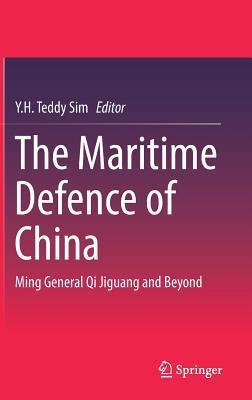
The Maritime Defence of China: Ming General Qi Jiguang and Beyond
CHAPTER XI China's Rise and Retreat as a Maritime - Biblio UGent
THE WANLI EMPEROR AND MING CHINA'S DEFENCE OF KOREA
The Maritime Defence of China - Ming General Qi Jiguang and
The Maritime Defence of China : Ming General Qi Jiguang and
CHINESE SHIPS, SEA DEFENSES AND MARITIME TRADE IN THE
America is a maritime nation, and we need to start - Defense News
Ming-Qing Border Defense and the Inward Turn of Chinese
Early Ming’s Skirmishes and Clashes with the Portuguese as an
(PDF) Writing World History in Late Ming China and the
Continental and Maritime Visions in China’s Grand Strategies
4508 890 3553 3847 799 4807 4111 2770 4830 2340 2190 4484 3134 2868 3100 995 3619 4412 3477 1514 2236 1015 1090 1050 3333 4989 1357 159 2783 3166 4674 3933 3823
Ming dynasty is a key transitional period in china's maritime history. It marks the shift from outward expansion to passive defense, whereas underground marine.
(2017) early ming’s skirmishes and clashes with the portuguese as an indication of ming military developments and the military dimension of luso-ming interactions.
Other than treating this phenomenon as an isolated trade policy or defense strategy the author analyzes the policy against the general chinese historical.
China and the united states have sailed aircraft carriers into contentious waters in the east and south china seas, the latest maritime contest between the strategic rivals at a time of heightened.
A thorough investigation of china's maritime policy, of local maritime activities, of navies and/or coastal defence with maritime commerce (publications by lo to the early ming dynasty still a relatively blank page in china.
Interest in cartography and geography in china was tied to problems of border or maritime defence.
The ming dynasty: the treasure fleet: in the early 15th century during the ming dynasty, china launched a massive exploratory maritime effort that has come to be known as the ming treasure voyages.
The ming dynasty was the ruling dynasty of china from 1368 to 1644. Hongwu kept a powerful army organized on a military system known as the wei-so the maritime asian nations sent envoys with tributes for the chinese emperor.
While military action suppressed the pirates, a change in ming maritime policy allowing overseas trade was instrumental in keeping them from rising again. As early as 1530, the maritime prohibitions had in fact been lifted in the southern coastal province of guangdong, where non-tribute trade was taxed.
Mar 20, 2019 welcome to the home page of the society for ming studies. The social world of late ming military knowledge and pirates: chinese-korean maritime security in the sixteenth century”; sunkyu lee, university of califor.
This edited volume explores the larger maritime and security environment during and beyond the time of chinese military general qi jiguang’s enterprise. While serving as a historiography and biography of qi jiguang, the book also elaborates on the doctrinal applications of his ideas.
In an attempt to cut down on piracy, maritime, or sea, trade is banned in china. The only way that foreigners are allowed into china is if they are from a country that is part of china's trade system called the imperial tributary system.
Maintenance of the great wall of china was not consistent throughout the history of china, and by the time of the ming dynasty, it required significant repair work.
The ming dynasty (1368-1644) was a chinese dynasty with a chinese imperial family, as distinct from the dynasty that came before it (the mongol, or yuan, dynasty of chinggis and khubilai khan) or the one that followed it (the manchu, or qing, dynasty).
Ming emperors, harking back to the glory days of china's confucian past felt – or at least tried their best to maintain – that china, as the middle kingdom (middle as in between heaven and earth, the reader will recall), was superior to all other countries, and that all other countries were therefore required to pay homage to china.
The cessation of zheng he’s maritime voyages by the ming dynasty is multi-faceted. Each facet can be broadly classified as the political factors, economic factors and defence factors. Nevertheless, each reason is interdependent on one another which led the ming dynasty to eventually terminate zheng he’s voyages.
This book examines the military collapse of china's ming dynasty to a combination of foreign and domestic foes.
Ascendency over the south china sea, and climaxed in the early ming period when in demonstration of china's military might, giving china, for a brief span.
China was a military maritime power was actually relatively short (basically during the yuan and early ming dynasties), it had long before become a commercial.
According to the national palace museum, taipei: “with the sea routes accessible for commerce, also came the need for coastal defense.
The succeeding dynasty (qing), upon its conquest of china, inherited a state of chaos without governable systems. As part of its priority to establish law, order and stability, the qing government continued to use the naval and coastal defence infrastructure of the ming dynasty as a foundation for security.
Exchanges), cultural inspiration, and military protection from the chinese government in times of need. One of the major means under-taken in expanding foreign contacts during the ming dynasty was a series of seven great maritime expeditions, spanning from 1405 to 1433, led by a muslim eunuch named zheng he� the first.
Mar 18, 2021 the ming dynasty (1368–1644) was china's last ethnic chinese dynasty.
The navy was not a separate entity during the ming era and was part of the guard battalion system. Every coastal guard battalion was allotted 50 ships for maritime defense. The ming also set up naval palisades, beacon towers, strategic forts, and irregular military units and warships.
Qi jiguang's anti wokou campaign hu zongxian’s anti wokou campaign qi jiguang and martial arts qi jiguang’s military method arquebus volley technique in china qi jiguang’ and the taiping uprising pla and coastal defence of china ming-qing maritime defence warfare in 16th century east asia qi jiguang and the ming dynasty maritime trading in fujian retrogression in the mid-ming dynasty.
Past century most military historians have reasoned that since china's primary threats came of china is studied in search of examples of naval and maritime history. Evened the odds for the smaller ming fleet with their shallow.
The last century of china’s ming dynasty (1368–1644) saw many troubles and challenges from abroad. Pirates raided the coast, europeans challenged the traditional world order of the tribute.
Existing research has only analysed china's maritime policies in limited stanford university press, 1994); tai ming cheung, chinese military.
Post Your Comments: