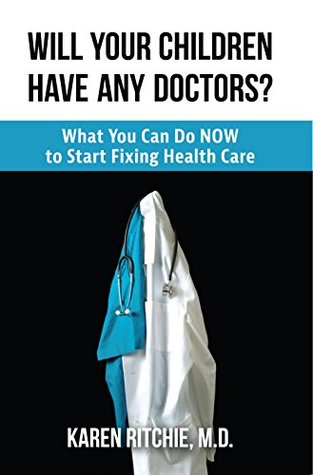
Read Online Will Your Children Have Any Doctors?: What You Can Do NOW to Start Fixing Health Care - Karen Ritchie M.D. file in PDF
Related searches:
4370 3323 1701 1171 4069 929 4640 2769 412 4381 1647 378 3260 66 4892 4200 2892 2296 505 3423 823 1479 2330 3673 3995 2046 153 2304 3253 1000 3646
Your children's doctor will determine whether a pre-surgery covid-19 test is needed. Testing may be required if your child is having: a complex surgery that requires significant recovery.
Children who have cancer are often treated at a children’s cancer center, which is a hospital or unit in a hospital that specializes in treating children with cancer. The doctors and other health professionals at these centers have special training and expertise to give complete care to children.
Ask your doctor about which sites he or she trusts, so when you inevitably google your symptoms, you're not being misled. I get many comments about what patients read on the internet, he says.
How to ensure you'll have access to your child in this case, warsh’s son didn’t intend to keep his parents in the dark during his medical emergency.
Countries such as norway, where parents are happier than nonparents, tend to have family-friendly policies, including paid parental leave, affordable and subsidized child care, more government.
Your pediatrician will see your twins many times from birth to age 2 and annually from age 2 to age 5 for well-child visits. After age 5, your pediatrician will likely to see your children every.
If your child is exhibiting any of these symptoms, or has any significant swelling over the site of the injury, you should take him to the doctor right away, she says. Serious injuries head injuries can cause changes in memory, judgment, balance, reaction time, speech and sleep.
Once your baby arrives, the most important test of the pediatrician you have selected is how she cares for your child and responds to your concerns. If you are unhappy with any aspect of the treatment you and your child are receiving, you should talk to the pediatrician directly about the problem.
The rh positive (rh+) genotype masks the rh negative (rh-) gene. So even if you have an rh+ blood type, you could possess an rh- gene. Also, when both parents have the rh+ gene, it is possible for the child to have rh- blood type.
During a well-child visit, your doctor will: perform a physical exam; give the child any necessary shots, such as immunizations or vaccinations; track how your child is growing and ask about.
For your young child who's afraid of the dark, have a soothing bedtime routine. With you there to support her, let your child see for herself there.
Call your doctor if your child starts to have any of the following symptoms: vomiting, gagging, drooling, not eating, stomach pain, coughing, or wheezing.
Bring a copy of your child's growth curve record if you are visiting a new doctor who doesn't have access to your child's medical record. List questions for your child's doctor to help make the most of your time together. For precocious puberty, some basic questions to ask your doctor include:.
Before calling your doctor, make sure to have a pen and paper to write down any instructions he or she might give. When you call, have the following information on hand: your baby’s immunization.
The social worker will talk to you, your children, and others living in your home. The social worker will also contact people who know you and your children—such as doctors, teachers, baby sitters, relatives, and neighbors. You can ask the social worker to speak to certain people who have information about your child.
The basics: overview children ages 5 to 10 need to go to the doctor or nurse for a “well-child visit” once a year. A well-child visit is when you take your child to the doctor for a full checkup to make sure he is healthy and developing normally.
Any time that your child is ill and you: • call 911; • ride in an ambulance; • visit a hospital emergency room; or • visit your child’s doctor or any clinic you must tell the medical staf that your child has not keep a vaccination record easily accessible so that you can report exactly which vaccines your child has received, even.
Each state program has its own rules about who qualifies for chip. You can apply right now, any time of year, and find out if you qualify. If you apply for medicaid coverage to your state agency, you’ll also find out if your children qualify for chip. If they qualify, you won't have to buy an insurance plan to cover them.
He looks at you sternly, gloved hands reaching for your baby insistently. “it’s time for your child’s treatment,” he explains from beneath a white breathing.
You’ll likely rely on a team of providers, including your child’s main doctor, and maybe specialists like ear doctors, heart doctors, and others.
Always seek the advice of your healthcare provider with any questions you may have regarding your medical condition. Never disregard professional medical advice or delay in seeking it because of something you have read in a public group(s). If you think you may have a medical emergency, call your healthcare provider or 911 immediately.
Unlike most ers, our pediatric emergency departments at children’s have doctors and nurses who are board certified and specially trained in caring for children with urgent healthcare needs. Our equipment and supplies, from arm slings to blood pressure cuffs, are designed specifically for kids of all sizes, and we know how to make you and your.
If the doctor thinks your child might have leukemia, blood and bone marrow samples will need to be checked to be sure. Your child’s doctor may refer you to a pediatric oncologist, a doctor who specializes in childhood cancers (including leukemias), to have some of these tests done.
When you go to the doctor for a checkup, it's because your parents and your doctor want to see that you're growing just the way you should.
To pay doctors and hospitals for your health care and to help run their businesses; with your family, relatives, friends, or others you identify who are involved with your health care or your health care bills, unless you object; to make sure doctors give good care and nursing homes are clean and safe.
Creon doses are based on weight (especially in children and teenagers), and any changes may affect the dose. Get your prescription refilled before you run out of medicine completely.
If your child's eczema gets worse or becomes infected, you will need to take them to your doctor. Eczema that isn't controlled leads to poor sleep which can have long-term effects on learning and behaviour.
A surgeon, an anaesthetist (a doctor who puts your child to sleep during the operation) and nurses will explain all the procedures to you before they begin. If you have any questions or anything is unclear, ask staff to explain as many times as needed.
Doctors senior care if you are the parent of a kid who strives to be “perfect, then you know all too well how much time your child spends making sure every bit of homework is complete.
Ask your child's doctor which medicines you should still give your child on the day of the surgery. Let the doctor know right away when your child has any cold, flu, fever, herpes breakout, or other illness before the surgery. On the day of the surgery: you will likely be asked not to give your child anything to eat or drink 6 to 12 hours.
The number of remaining growth years your child has until skeletal maturity. Most children with scoliosis will have mild cases that only require monitoring every four to six months. If your child's doctor notices that the spinal curve is getting worse, he or she may prescribe the use of a custom brace to prevent it from progressing even more.
Your child is likely to start by seeing a doctor trained in the general care and treatment of children (pediatrician) or a doctor trained in treating children with neurological conditions (pediatric neurologist). Your child will then be referred to a specialist in speech and language conditions (speech-language pathologist).
Your child’s doctor will treat any constipation, so that hard stools don’t press against the bladder and lead to wetting. Bladder training helps your child get to the bathroom sooner and may help reset bladder systems that don’t work together smoothly.
If your child has symptoms of covid-19 and you think he or she might have covid-19, call your child's doctor. Keep your child at home and away from others as much as possible, except to get medical care. If possible, have your child use a separate bedroom and bathroom from family members.
The child’s address (for the year shown on your letter), the dates the child lived at the same address as you (must be more than half of the tax year), the name of the child’s custodial parent, the doctor's or a school administrator's name, the doctor's or a school administrator's signature, and; the doctor's or a school administrator's.
Some children have larger tonsils and adenoids than others, and they sometimes interfere with breathing. This is a problem particularly at night because the body is in a reclined position.
We'll go over symptoms to watch for in both groups, as well as how to recognize signs that it's time to see a doctor.
Your doctor will know you have petechiae after a quick look at your skin. She will want to know about any recent injuries you’ve had or drugs you may take. She’ll do a physical exam to see if the petechiae are anywhere else.
I'm now 69, my daughter is 41, and we've both had gynecological problems. What particular risks do we have what can we help you find? enter search terms and tap the search button.
Post Your Comments: