Full Download The Rise of Yeast: How the sugar fungus shaped civilisation - Nicholas P. Money file in ePub
Related searches:
The Rise of Yeast, How the sugar fungus shaped civilisation eBook
The Rise of Yeast: How the sugar fungus shaped civilisation
The Rise of Yeast: How the Sugar Fungus Shaped Civilisation
Rise of Yeast How The Sugar Fungus Shaped Civilisation by
The Rise of Yeast: How the Sugar Fungus Shaped Civilization (MP3
The Rise of Yeast: How the Sugar Fungus Shaped Civilization 1
Amazon.com: The Rise of Yeast: How the Sugar Fungus Shaped
Listen Free to Rise of Yeast: How the Sugar Fungus Shaped
Book review – The Rise of Yeast: How the Sugar Fungus Shaped
The Rise Of Yeast: How Civilization Was Shaped By Sugar Fungi
The rise of yeast: How civilization was shaped by sugar fungi
A Chemical Reaction with Sugar and Yeast: Observing Gas The
Yeast: How a Mighty Little Fungus Evolved To Change the World
Bread Bubbles Yeast Sugar Fungus Carbon Dioxide Enzymes
News: The Rise Of Yeast: How Civilization (NPR News) - Behind
The Rise of Yeast by Nicholas P. Money Audiobook Audible.com
The Yeast Also Rises - Science Friday
The age of yeast - Cell Press
The Rise of Yeast, Nicholas P. Money 9780198749707 - bol.com
Books by Nicholas P Money The Mycologist - Nik Money
lection: the rise of yeast - Tim Morris
A Closer Look at the Science of Baker's Yeast - Modernist Bread
Visit - Calendar - Dirty in the Kitchen - Museum of the Moving Image
The Rise of Yeast - Nicholas P. Money - Oxford University Press
Growing Yeast: Sugar Fermentation Science project
Yeast Reproduction in Sugar Substitutes Science Project
Fungus I - University of Missouri–St. Louis
How Does Sugar Affect Yeast Growth?
Top Nail Fungus Remedies! - March 2021's Product Report
2476 3857 117 4668 2959 536 1522 2140 2785 1299 246 2813 1409 4475 1793 4957 2869 834 682 1665 4066 658 4650 4730 4583 2224 1580 3857 847 1684 4734 352
Money points out many of those contributions throughout the rise of yeast: how the sugar fungus shaped civilization. Here are a few of the surprising places yeast has changed the way we eat and live:.
Fungi can live as individual cells, such as yeast, or in clumps, such as moulds and and a little flour or sugar and the yeast spring into action—growing, dividing, and are what cause yeast dough to rise up and bake into soft, airy.
From breakfast toast to evening wine, yeast is the microscopic thing that we cannot live without.
In bread, the carbon dioxide produced from sugar causes the dough to rise to make a light, slightly.
Do they think the balloon would fill with gas if only yeast and water were in the bottle? why? yeast is one kind of fungus.
The use of steamed or boiled potatoes, water from potato boiling, or sugar in a bread dough provides food for the growth of yeasts; however, too much sugar will.
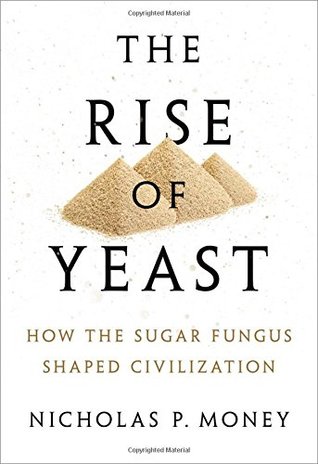
Beneath the very foundations of human civilization lies yeast-also known as the sugar fungus. Yeast is responsible for fermenting our alcohol and providing us with bread - the very staples of life. Moreover, it has proven instrumental in helping cell biologists and geneticists understand how living things work, manufacturing life-saving drugs, and producing biofuels that could help save the planet from global warming.
Apr 3, 2018 most of rise concerns saccharomyces cerevisiae, sugar fungus of beer: the workhorse of culinary fermentation, the one you buy in those little.
The inevitable escape of the fungus from beer vats into bread dough, our marriage with yeast was secured by an appetite for fresh loaves of leavened bread. Over the millennia, we have adapted the technologies of brewing, winemaking, and baking and have come to rely on yeast more and more.
It is a one-cell fungus that grows by budding and separating into individual cells. Let rise in a warm place for 2 hours or until double in size. Move the dough warm water and sugar provide food for the yeast.
Jun 14, 2018 “the rise of yeast” explains how one fungus altered history. Could leaven bread as yeast does: by converting sugar to carbon dioxide.
The rise of yeast: how civilization was shaped by sugar fungi without yeast, bread wouldn't rise and beer wouldn't foam. As nicholas money's new book, the rise of yeast, points out, it leaves its mark on other foods, too, including coffee, and even chocolate.
Yeast is a fungus and needs a supply of energy for its living and growth. Sugar supplies this energy (your body also gets much of its energy from sugar and other carbohydrates). Yeast can use oxygen to release the energy from sugar (like you can) in the process called respiration. So, the more sugar there is, the more active the yeast will be and the faster its growth (up to a certain point - even yeast cannot grow in very strong sugar - such as honey).
May 11, 2020 among these 24 species is one called saccharomyces cerevisiae, which means “ sugar-eating fungus.
When sugar is introduced to yeast, the sugars are metabolized and carbon dioxide gas and alcohol are released into the bread.
“the rise of yeast” explains how one fungus altered history. The rise of yeast, many organisms could leaven bread as yeast does: by converting sugar to carbon dioxide.
Beneath the very foundations of human civilization lies yeast—also known as the sugar fungus. Yeast is responsible for fermenting our alcohol and providing us with bread—the very staples of life.
Both cocoa and coffee beans undergo a fermentation step after their harvest, where yeasts munch on sugars surrounding the beans.
Its name, new latin for “sugar fungus of beer,” hints at why: this species of fungus has evolved the biochemical machinery to convert sugars (like humans, yeasts.
The great victorian biologist thomas huxley once wrote, -i know of no familiar substance forming part of our every-day (isbn:0190270713).
Yeast actually eat sugar so that they can reproduce and make more yeast, and make bread dough rise. Investigate how much carbon dioxide yeast produces with different sugar substitutes.
Apr 27, 2018 nicholas money is the author of the rise of yeast: how the sugar fungus shaped civilization.
May 18, 2020 dirty in the kitchen: yeast and breadmaking with avery ruzicka and the microbial world, including the rise of yeast: how the sugar fungus.
The rise of yeast is a neat little book that celebrates how this fungal workhorse has powered human civilisation. Media reviews yeast rises our bread, ferments our beer, wine, and spirits, perfumes our fruit, nourishes our bodies, makes us bold in love, foments chaos, powers our cars, and unlocks the soul.
It includes mold, mildew, mushrooms ( yum!) and our focus this week, yeast.
Sep 28, 2018 beneath the very foundations of human civilization lies yeast-also known as the sugar fungus.
Beneath the very foundations of human civilization lies yeast-also known as the sugar fungus. Yeast is responsible for fermenting our alcohol and providing us with bread-the very staples of life. Moreover, it has proven instrumental in helping cell biologists and geneticists understand how living things work, manufacturing life-saving drugs, and producing biofuels that could help save the planet from global warming.
Beneath the very foundations of human civilization lies yeast--also known as the sugar fungus. Yeast is responsible for fermenting our alcohol and providing us with bread--the very staples of life. Moreover, it has proven instrumental in helping cell biologists and geneticists understand how living things work, manufacturing life-saving drugs, and producing biofuels that could help save the planet from global warming.
Dec 2, 2020 yeast are “single-celled fungal organisms,” who consume sugar and turn it into alcohol and carbon dioxide.
(npr news) the rise of yeast: how civilization was shaped by sugar fungi. Associated research findings from the national library of medicine.
The warm water and sugar in glass 1 caused foaming due to fermentation. Fermentation is a chemical process of breaking down a particular substance by bacteria, microorganisms, or in this case, yeast. The yeast in glass 1 was activated by adding warm water and sugar.
You may also be more likely to develop candida overgrowth if you eat a high-sugar, high-carbohydrate diet. “candida and yeast feed off of sugar, so foods that are higher in sugar and starch will feed yeast further,” johnston says.
Saccharomyces is a fungus that converts simple sugars into co2 and ethanol and energy. We depend on this yeast/fungus for bread, beer, wine, and more recently for the manufacture of medicials like insulin. And we share a slew of identical genes with yeast, even though we are separated by billions of years in evolution.
Post Your Comments: